

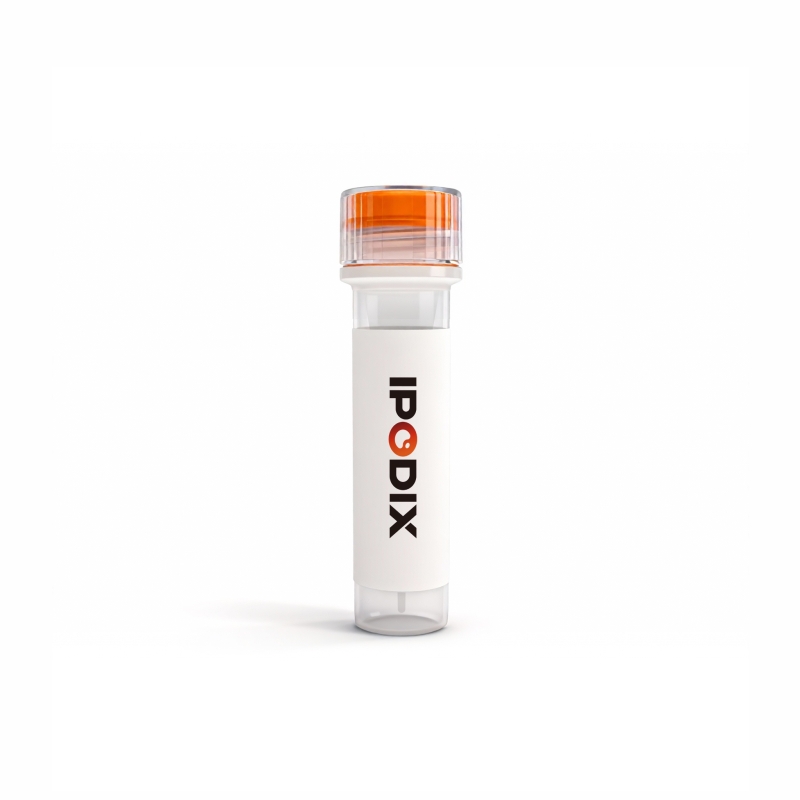
Analytical Data
-
Gene name
TDP43
- Application
-
Alternative Names
TDP43;TDP43;TAR DNA-binding Protein 43
-
Species
Human
-
Source
E. coli
-
Tag
His tag N-Terminus
-
Purity
Greater than 90% as determined by SDS-PAGE.
-
Uniprot
Q13148
-
Expression Region
1-260aa
-
AA Sequence
MRGSHHHHHH GMASMTGGQQ MGRDLYDDDD KDRWGSMSEY IRVTEDENDE PIEIPSEDDG TVLLSTVTAQ FPGACGLRYR NPVSQCMRGV RLVEGILHAP DAGWGNLVYV VNYPKDNKRK MDETDASSAV KVKRAVQKTS DLIVLGLPWK TTEQDLKEYF STFGEVLMVQ VKKDLKTGHS KGFGFVRFTE YETQVKVMSQ RHMIDGRWCD CKLPNSKQSQ DEPLRSRKVF VGRCTEDMTE DELREFFSQY GDVMDVFIPK PFRAFAFVTF ADDQIAQSLC GEDLIIKGIS VHISNA
-
Molecular Weight
34 kDa
-
Endotoxin
< 1.0 EU per μg protein as determined by the LAL method.
-
Form
Freeze-dried powder
-
Buffer formulation
PBS, pH7.4, containing 0.01% SKL, 1mM DTT, 5% Trehalose and Proclin300.
-
Reconstitution
Reconstitute in ddH2O to a concentration of 0.1-0.5 mg/mL. Do not vortex.
- Customization
-
Stability Test
The thermal stability is described by the loss rate. The loss rate was determined by accelerated thermal degradation test, that is, incubate the protein at 37℃ for 48h, and no obvious degradation and precipitation were observed. The loss rate isless than 8% within the expiration date under appropriate storage condition.
-
Storage & Shelf Life
Samples are stable for up to twelve months from date of receipt at -20℃ to -80℃. Store it under sterile conditions at -20℃ to -80℃. It is recommended that the protein be aliquoted for optimal storage. Avoid repeated freeze-thaw cycles.
-
Shipping
In general, recombinant proteins are supplied as lyophilized powder and shipped at ambient temperature. For bulk packages, the proteins are provided as frozen liquid and shipped with blue ice, unless otherwise requested by the customer.
Quality inspection process

Related Products
Protein Description
TDP-43 (TAR DNA-binding protein 43) is a highly conserved nuclear protein that plays a crucial role in RNA processing, including splicing, transport, and stability. Its significance has gained attention primarily due to its association with neurodegenerative diseases, particularly frontotemporal lobar degeneration (FTLD) and amyotrophic lateral sclerosis (ALS). Abnormal aggregation and cytoplasmic mislocalization of TDP-43 are hallmark features of these diseases, leading to the disruption of RNA metabolism and neuronal dysfunction. The study of TDP-43 recombinant protein is essential for understanding its molecular mechanisms and interactions within the cell, as well as the pathophysiological implications of its aggregates. By producing TDP-43 in a recombinant form, researchers can examine its structural properties, post-translational modifications, and the effects of mutations linked to disease. This research not only helps to elucidate the role of TDP-43 in gene regulation but also provides a platform for developing potential therapeutic strategies targeting its aggregation or restoring its normal function in affected patients. As such, TDP-43 continues to be a focal point in neurobiology and a promising candidate for advancing our understanding of the underlying mechanisms driving neurodegeneration.







