Protein Labeling Quantification Services

The Protein Labeling & Quantification Service delivers quantifiable and highly consistent protein signals via precise control over labeling formats, conjugation sites and labeling ratios, with wide applications in molecular interaction analysis, quantitative detection and functional research. Leveraging established labeling and quantification technology platforms, our team provides stable, reproducible labeling solutions for diverse protein species. Fluorescent, biotin or chemical labeling methods are rationally selected according to protein structural features and downstream experimental requirements throughout the workflow. Rigorous optimization and validation of labeling ratios are performed to preserve native protein conformation and biological activity. All delivered samples undergo comprehensive quality inspection and are directly compatible with detection platforms including SPR, BLI and MST, delivering reliable data support for academic research and drug development.
Service Workflow

  • 1 Day

    Demand Assessment

    Clarify protein type, labeling method and downstream detection platforms (SPR, BLI, MST, etc.).

  • 1 Day

    Labeling Scheme Design

    Design labeling types, conjugation sites and labeling ratios to balance signal intensity and native protein activity.

  • 2–3 Weeks

    Labeling Implementation

    Perform protein labeling under optimized conditions to guarantee stable and controllable reaction processes.

  • 2 Days

    Quality Validation

    Verify protein purity, biological activity and batch-to-batch stability.

  • 1 Day

    Result Delivery

    Deliver labeled protein samples and quantitative detection data to support subsequent downstream experiments.

Service Types

Click to Customize
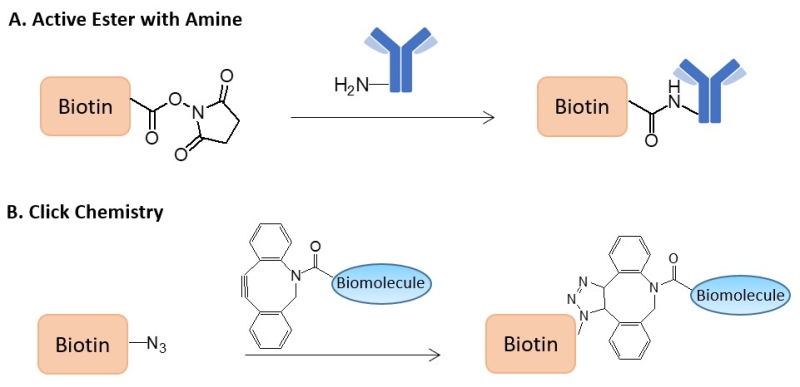
  • Biotinylation

    Biotinylation is a common labeling technique that covalently attaches biotin to target protein molecules via chemical or enzymatic approaches. Biotin exhibits an extremely high and specific binding affinity to streptavidin and avidin, with a dissociation constant(Kd≈10⁻¹⁵ M). Proteins labeled with biotin can therefore be captured and detected efficiently and stably.

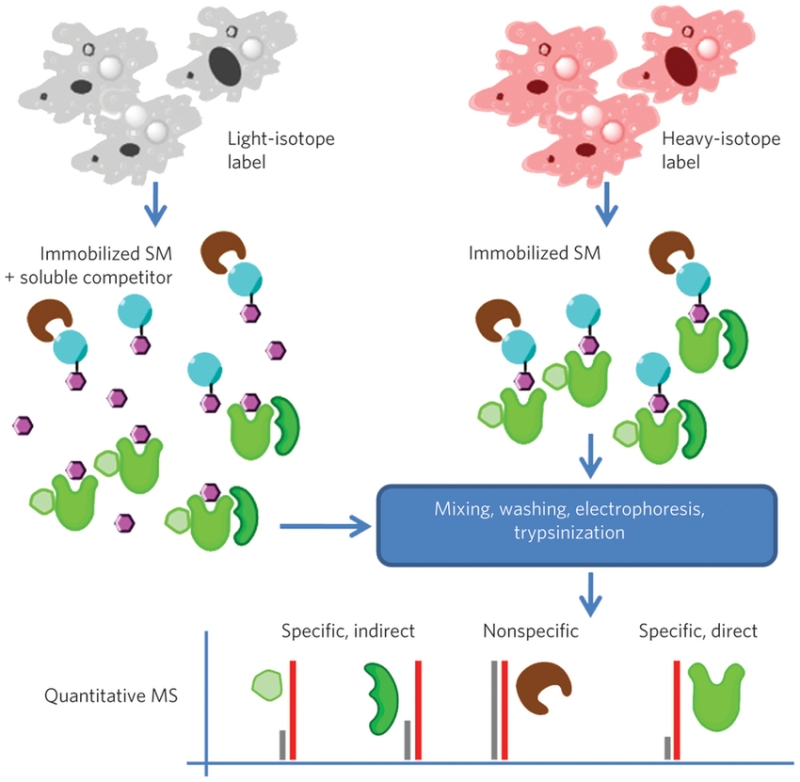
  • Stable Isotope Labeling

    Stable isotope labeling is a differential labeling technology that replaces natural isotopes within proteins or small molecules with non-radioactive stable isotopes (e.g., ²H, ¹³C, ¹⁵N). Labeling is achieved through metabolic incorporation or chemical synthesis. This labeling strategy does not alter the chemical properties or biological activity of target molecules, yet generates distinct mass shifts that can be precisely resolved via mass spectrometry and other analytical tools. Stable isotope labeling is widely adopted in quantitative proteomics (such as SILAC), metabolic flux analysis, pharmacokinetic research and molecular interaction studies.

  • Fluorescent Labeling in Vitro

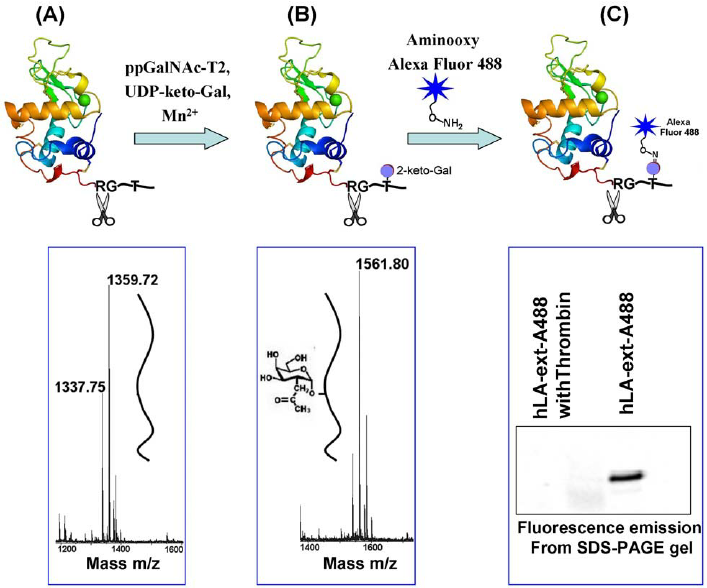
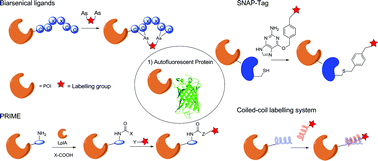
    In vitro fluorescent labeling is a labeling technology that covalently conjugates fluorescent dyes (e.g., FITC, Alexa Fluor, Cy dyes, etc.) to target proteins or other biomolecules via chemical reactions under in vitro conditions. The labeling reaction is generally performed on purified samples, with fully controllable conjugation sites and labeling degrees, causing minimal interference to the native structure and biological functions of proteins.

  • Fluorescent Tagged Protein in Vivo

    In vivo fluorescent protein tagging adopts gene fusion expression to co-express fluorescent protein tags (e.g., GFP, mCherry) with target proteins inside cells or living organisms, enabling target proteins to emit real-time fluorescent signals under physiological environments. Without compromising cellular integrity, this technique supports visual monitoring of protein expression, subcellular localization, dynamic behaviors and biomolecular interactions.

More related services

Click to Customize

Frequently Asked Questions

  • What is protein labeling & quantification service? What key experimental challenges can it address?

    Protein Labeling & Quantification Service delivers precise quantitative analysis of labeling efficiency and Degree of Labeling (DOL) while conjugating target proteins with fluorescent dyes, enzymes, biotin, stable isotopes and other tags. This service effectively resolves common experimental defects triggered by uneven, excessive or insufficient labeling, including unstable signal output, elevated background noise and inaccurate quantitative readouts. It is widely applied in SPR/BLI analysis, ELISA, flow cytometry, fluorescence imaging and in vivo tracing research.

  • What types of protein labeling and corresponding quantification methods are available?

    We provide multiple mainstream protein labeling options, including fluorescent dyes (FITC, Alexa Fluor series), biotin, biotin-streptavidin system, enzymatic labeling (HRP, AP) and stable isotope labeling. Corresponding quantification approaches such as UV/Vis spectrophotometry, fluorometry, colorimetric assay and mass spectrometry are selected according to labeling formats, delivering accurate, reproducible and traceable Degree of Labeling results.

  • How is the labeling ratio controlled during protein conjugation to avoid impairment of protein activity or binding capacity?

    Prior to labeling, our team comprehensively evaluates the target protein’s molecular weight, amino acid composition, domain distribution and downstream experimental applications to rationally design conjugation sites and reaction parameters. By optimizing molar reaction ratios, incubation duration and buffer formulations, the Degree of Labeling is precisely regulated within the target range. This balances robust signal intensity with maximal retention of the protein’s native conformation and biological activity.

  • Do quantitative results from protein labeling exhibit consistent performance across batches, and are they applicable for quantitative or comparative experiments?

    Yes. Our standardized labeling and quantification workflow is supported by rigorous quality control systems, achieving high consistency of labeling ratios across batches. It is suitable for experimental designs requiring strict quantification or multi-batch comparative analysis. Complete datasets including Degree of Labeling (DOL), protein concentration and purity measurements are provided for every batch of samples, ensuring excellent comparability and reproducibility of experimental outcomes.

If you have any questions, please contact us.

  • Name *

  • Tel *

  • Email *

  • Country *

  • Company *

  • Consultation Type *

  • Consultation content *

IPODIX Biotech Inc

2108 N ST, STE N
Sacramento, CA 95816, USA

For Product Information and Orders

sales@ipodix.com

For Business Collaboration

sales@ipodix.com

For CRO Services

sales@ipodix.com

For Technical Support

sales@ipodix.com
  • 50000+

    Recombinant Proteins

  • 100+

    Researchers

  • 100+

    Countries Served

  • ISO

    Certified Quality

Committed to Quality
Driven by Innovation

Learn More About US