Yeast protein expression service

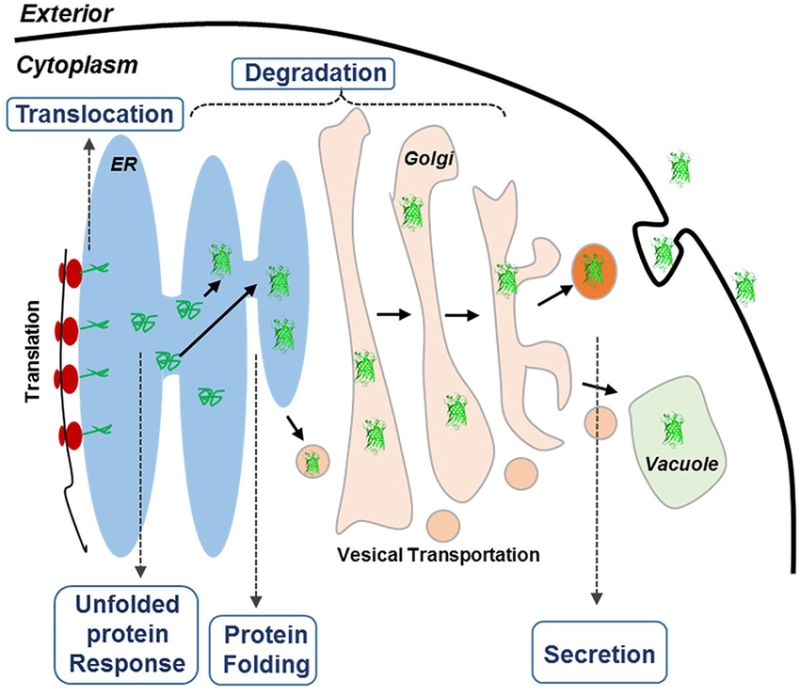
The yeast expression platform is a mature and stable eukaryotic system for recombinant protein production, balancing protein quality, production efficiency and cost advantages. This system enables proper protein folding and critical post-translational modifications, making it ideal for secreted proteins, functional enzymes and proteins with moderate structural complexity. Supported by high-density cultivation and consistent scalability, yeast expression allows seamless scale-up from lab scale to industrial production. Compared with prokaryotic systems, its products exhibit native-like structure and functionality. In contrast to higher eukaryotic expression systems, it features shorter production cycles and lower costs, serving a wide range of academic research and industrial applications.
Service Workflow

  • 5 Hours

    Project Scheme Design

    Sequence Analysis • Tags • Signal Peptides • Vector Strategies

  • 1 Week

    Gene Synthesis & Vector Construction

    • Dominant codon optimization system • Analysis and optimization of rare codons, codon bias and other factors

  • 1 Week

    Host Cell Transformation

    • Preparation of competent cells • Transformation and plate screening • Genomic integration predominates in pichia pastoris

  • 1 Week

    Protein Expression And Purification

    • Small-scale fermentation culture • Expression condition optimization • Protein expression evaluation • Diverse protein purification methods

  • 1 Week

    Customized Services (Optional)

    Secondary purification • Tag removal • Endotoxin removal • Protein labeling • Activity assay • Protein analysis

  • 2 Days

    Re-Inspection, Warehousing & Delivery

    Deliverables:

    • Purified protein • Certificate of Analysis (COA)

Extended Services

We provide customized extended services tailored to diverse project requirements, including: - Endotoxin Removal Service - Tag Removal Service - Protein Labeling Service - Protein Affinity Detection Service - Protein Mutation Service

Service Advantage

Click to Customize
  • Strong high-density expression capacity

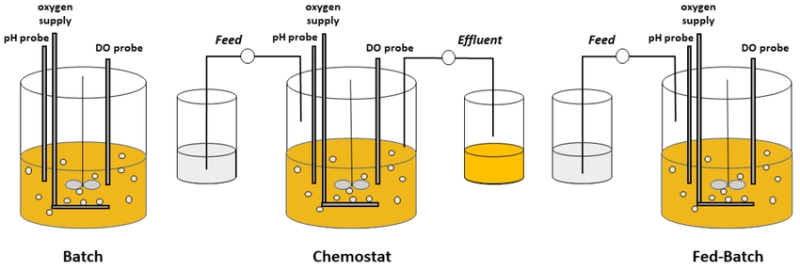
    Yeast cells can achieve high-cell-density fermentation to significantly boost protein yield per liter. It is especially suitable for academic and industrial projects with clear expression volume requirements, balancing efficiency and cost-effectiveness.

  • Mature secretory expression system

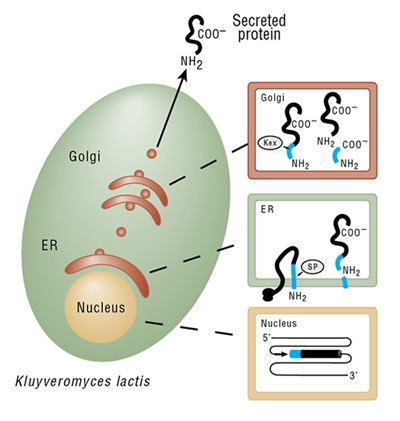
    Yeast has a mature secretory pathway, which can secrete target proteins directly into culture supernatant via signal peptides such as α-factor signal peptide. It effectively reduces host protein background and greatly simplifies the purification process.

  • Complete eukaryotic modification capability

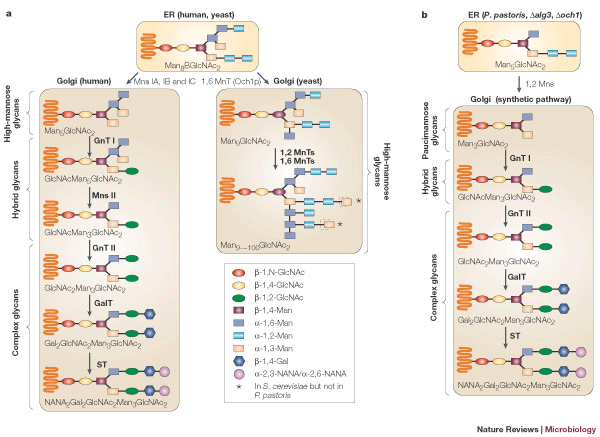
    Yeast Expression System owns complete capacity of Post-Translational Modifications (PTMs), including Glycosylation, Disulfide bond formation and so on. Compared with prokaryotic systems, yeast is more conducive to obtaining functionally folded proteins with correct conformation and stable modifications.

  • Stable and reliable batch consistency

    The yeast fermentation platform is well-established with highly standardized process parameters and excellent batch-to-batch reproducibility. It facilitates the generation of stable, comparable data to meet research and application scenarios with strict demands for consistency and reliability.

More related services

Click to Customize

Frequently Asked Questions

  • Why does the expression level of the same protein vary greatly between batches?

    Common causes of batch fluctuations in yeast expression include differences in clone stability, inconsistent induction conditions, variations in cell density and dissolved oxygen, as well as changes in culture media and operational details across batches. We usually improve batch consistency by screening and fixing high-yield, stable clones, and standardizing induction parameters including duration, temperature, inducer concentration and culture cycle. For projects requiring long-term supply, we also recommend adopting a single batch of seed bank system to reduce fluctuations.

  • The target protein is expressed but mostly retained intracellularly instead of being secreted into the supernatant. How to solve this problem?

    This phenomenon usually indicates insufficient secretion efficiency, which may result from poor matching of signal peptides, protein retention caused by excessive folding stress, or saturation of the secretory pathway. We will first evaluate whether the target protein is more suitable for intracellular expression. Meanwhile, secretion levels can be improved by replacing signal peptides, adjusting construct boundaries or optimizing culture and induction intensity. If necessary, the route of intracellular expression followed by lysis and purification can be adopted to increase overall yield and controllability.

  • There are abundant background proteins in yeast supernatant and numerous impurity bands after purification. How to resolve this issue?

    Although secretory expression can reduce hybrid proteins introduced by cell lysis, some yeast hosts still secrete a certain amount of background proteins, leading to more impurity bands during purification. We usually strengthen the washing intensity of affinity purification and optimize salt concentration and pH conditions to cut down non-specific binding. If customers have higher purity requirements, additional polishing steps such as ion exchange or gel filtration can be performed after affinity purification to obtain purer and more homogeneous target proteins.

  • Can yeast expression systems be used to produce membrane proteins or highly hydrophobic proteins?

    The yeast system has certain potential for expressing partial membrane proteins or hydrophobic proteins, yet the overall difficulty remains relatively high. In particular, multi-transmembrane proteins often require more sophisticated expression and purification conditions. We generally recommend conducting small-scale feasibility tests first, and improving success rates through construct design including truncation, fusion tags and altered expression formats. If high-quality membrane proteins are required for structural research, insect or mammalian expression systems are usually more advantageous.

If you have any questions, please contact us.

  • Name *

  • Tel *

  • Email *

  • Country *

  • Company *

  • Consultation Type *

  • Consultation content *

IPODIX Biotech Inc

2108 N ST, STE N
Sacramento, CA 95816, USA

For Product Information and Orders

sales@ipodix.com

For Business Collaboration

sales@ipodix.com

For CRO Services

sales@ipodix.com

For Technical Support

sales@ipodix.com
  • 50000+

    Recombinant Proteins

  • 100+

    Researchers

  • 100+

    Countries Served

  • ISO

    Certified Quality

Committed to Quality
Driven by Innovation

Learn More About US