

Analytical Data
-
Gene name
HDAC5
- Application
-
Alternative Names
HDAC5;KIAA0600;Histone deacetylase 5
-
Species
Human
-
Source
E. coli
-
Tag
His tag N-Terminus
-
Purity
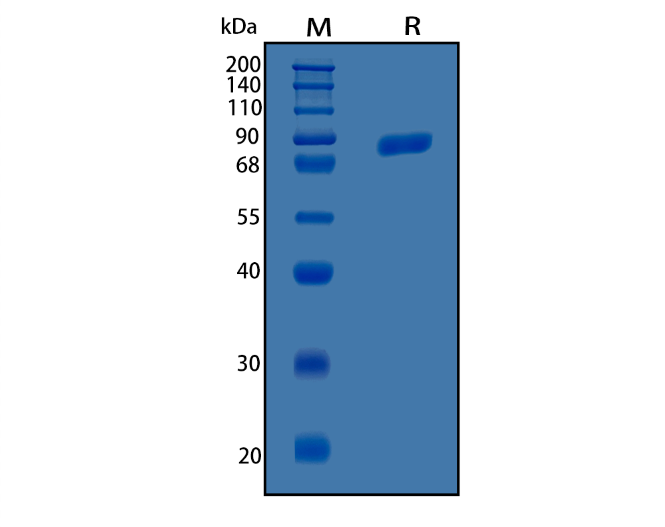
Greater than 90% as determined by SDS-PAGE.
-
Uniprot
Q9UQL6
-
Expression Region
1-1122aa
-
AA Sequence
MNSPNESDGM SGREPSLEIL PRTSLHSIPV TVEVKPVLPR AMPSSMGGGG GGSPSPVELR GALVGSVDPT LREQQLQQEL LALKQQQQLQ KQLLFAEFQK QHDHLTRQHE VQLQKHLKQQ QEMLAAKQQQ EMLAAKRQQE LEQQRQREQQ RQEELEKQRL EQQLLILRNK EKSKESAIAS TEVKLRLQEF LLSKSKEPTP GGLNHSLPQH PKCWGAHHAS LDQSSPPQSG PPGTPPSYKL PLPGPYDSRD DFPLRKTASE PNLKVRSRLK QKVAERRSSP LLRRKDGTVI STFKKRAVEI TGAGPGASSV CNSAPGSGPS SPNSSHSTIA ENGFTGSVPN IPTEMLPQHR ALPLDSSPNQ FSLYTSPSLP NISLGLQATV TVTNSHLTAS PKLSTQQEAE RQALQSLRQG GTLTGKFMST SSIPGCLLGV ALEGDGSPHG HASLLQHVLL LEQARQQSTL IAVPLHGQSP LVTGERVATS MRTVGKLPRH RPLSRTQSSP LPQSPQALQQ LVMQQQHQQF LEKQKQQQLQ LGKILTKTGE LPRQPTTHPE ETEEELTEQQ EVLLGEGALT MPREGSTESE STQEDLEEED EEDDGEEEED CIQVKDEEGE SGAEEGPDLE EPGAGYKKLF SDAQPLQPLQ VYQAPLSLAT VPHQALGRTQ SSPAAPGGMK SPPDQPVKHL FTTGVVYDTF MLKHQCMCGN THVHPEHAGR IQSIWSRLQE TGLLSKCERI RGRKATLDEI QTVHSEYHTL LYGTSPLNRQ KLDSKKLLGP ISQKMYAVLP CGGIGVDSDT VWNEMHSSSA VRMAVGCLLE LAFKVAAGEL KNGFAIIRPP GHHAEESTAM GFCFFNSVAI TAKLLQQKLN VGKVLIVDWD IHHGNGTQQA FYNDPSVLYI SLHRYDNGNF FPGSGAPEEV GGGPGVGYNV NVAWTGGVDP PIGDVEYLTA FRTVVMPIAH EFSPDVVLVS AGFDAVEGHL SPLGGYSVTA RCFGHLTRQL MTLAGGRVVL ALEGGHDLTA ICDASEACVS ALLSVELQPL DEAVLQQKPN INAVATLEKV IEIQSKHWSC VQKFAAGLGR SLREAQAGET EEAETVSAMA LLSVGAEQAQ AAAAREHSPR PAEEPMEQEP AL
-
Molecular Weight
149 kDa
-
Endotoxin
< 1.0 EU per μg protein as determined by the LAL method.
-
Form
Freeze-dried powder
-
Buffer formulation
PBS, pH7.4, containing 0.01% SKL, 1mM DTT, 5% Trehalose and Proclin300.
-
Reconstitution
Reconstitute in ddH2O to a concentration of 0.1-0.5 mg/mL. Do not vortex.
- Customization
-
Stability Test
The thermal stability is described by the loss rate. The loss rate was determined by accelerated thermal degradation test, that is, incubate the protein at 37℃ for 48h, and no obvious degradation and precipitation were observed. The loss rate isless than 8% within the expiration date under appropriate storage condition.
-
Storage & Shelf Life
Samples are stable for up to twelve months from date of receipt at -20℃ to -80℃. Store it under sterile conditions at -20℃ to -80℃. It is recommended that the protein be aliquoted for optimal storage. Avoid repeated freeze-thaw cycles.
-
Shipping
In general, recombinant proteins are supplied as lyophilized powder and shipped at ambient temperature. For bulk packages, the proteins are provided as frozen liquid and shipped with blue ice, unless otherwise requested by the customer.
Quality inspection process

Related Products
Protein Description
Histone deacetylase 5 (HDAC5) is a member of the class II histone deacetylase family, which plays a pivotal role in regulating gene expression through the modification of histone and non-histone proteins. Research has shown that HDAC5 is involved in various biological processes, including muscle differentiation, cardiac hypertrophy, and neuronal function. Its dysregulation has been linked to several diseases, including cancer, neurodegenerative disorders, and cardiac diseases. The study of recombinant HDAC5 proteins is crucial for understanding its biochemical properties, substrate specificity, and the mechanisms of action in various cellular contexts. By producing and purifying recombinant HDAC5, researchers can investigate its enzymatic activity, interactions with other proteins, and its role in cellular signaling pathways. This research has the potential to unveil novel therapeutic targets for treating diseases associated with HDAC5 dysregulation. Moreover, understanding the structural and functional aspects of HDAC5 could lead to the development of selective inhibitors that may provide more effective treatments with fewer side effects compared to non-selective histone deacetylase inhibitors currently in use. Overall, the characterization of HDAC5 as a recombinant protein represents a significant advancement in the quest to understand its biological roles and therapeutic potential.







