

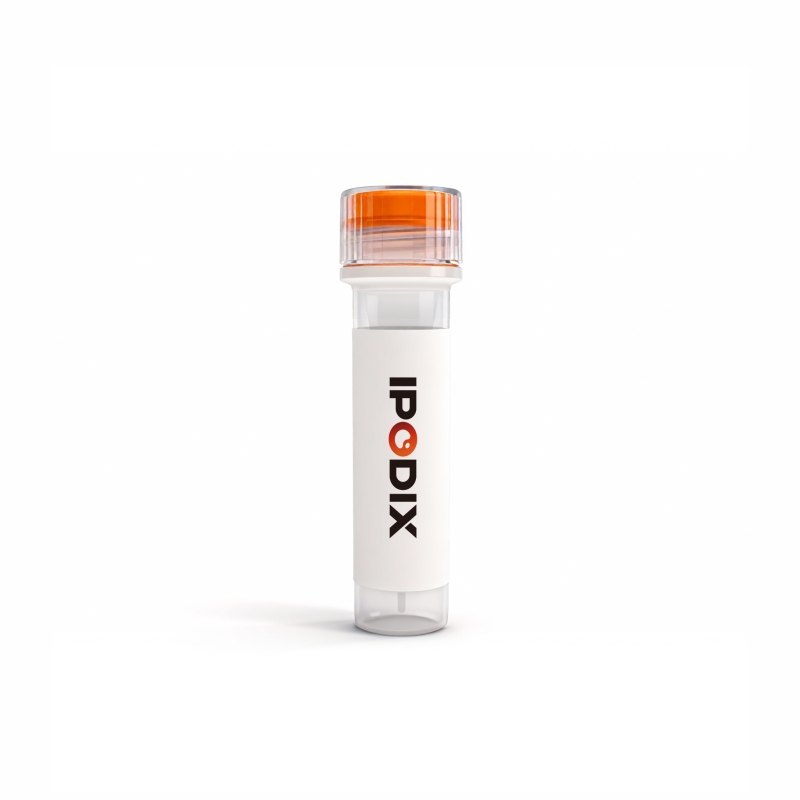
Analytical Data
-
Gene name
ANKDD1A
- Application
-
Alternative Names
AKD1A_HUMAN; ANKDD1A; Ankyrin repeat and death domain containing 1A
-
Species
Human
-
Source
E. coli
-
Tag
His tag N-Terminus
-
Purity
Greater than 90% as determined by SDS-PAGE.
-
Uniprot
Q495B1
-
Expression Region
1-522aa
-
AA Sequence
MQEELAWETD GLLPLERQLH EAARQNNVGR MQELIGRRVN TRARNHVGRV ALHWAAGAGH EQAVRLLLEH EAAVDEEDAV GALTEARLCF GMNALLLSAW FGHLRILQIL VNSGAKIHCE SKDGLTLLHC AAQKGHVPVL AFIMEDLEDV ALDHVDKLGR TAFHRAAEHG QLDALDFLVG SGCDHNVKDK EGNTALHLAA GRGHMAVLQR LVDIGLDLEE QNAEGLTALH SAAGGSHPDC VQLLLRAGST VNALTQKNLS CLHYAALSGS EDVSRVLIHA GGCANVVDHQ GASPLHLAVR HNFPALVRLL INSDSDVNAV DNRQQTPLHL AAEHAWQDIA DMLLIAGVDL NLRDKQGKTA LAVAVRSNHV SLVDMIIKAD RFYRWEKDHP SDPSGKSLSF KQDHRQETQQ LRSVLWRLAS RYLQPREWKK LAYSWEFTEA HVDAIEQQWT GTRSYQEHGH RMLLIWLHGV ATAGENPSKA LFEGLVAIGR RDLAGWSTMA RSQLTATSAS RVQMILVPQP PE
-
Molecular Weight
57.5 kDa
-
Endotoxin
< 1.0 EU per μg protein as determined by the LAL method.
-
Form
Freeze-dried powder
-
Buffer formulation
PBS, pH7.4, containing 0.01% SKL, 1mM DTT, 5% Trehalose and Proclin300.
-
Reconstitution
Reconstitute in ddH2O to a concentration of 0.1-0.5 mg/mL. Do not vortex.
- Customization
-
Stability Test
The thermal stability is described by the loss rate. The loss rate was determined by accelerated thermal degradation test, that is, incubate the protein at 37℃ for 48h, and no obvious degradation and precipitation were observed. The loss rate isless than 8% within the expiration date under appropriate storage condition.
-
Storage & Shelf Life
Samples are stable for up to twelve months from date of receipt at -20℃ to -80℃. Store it under sterile conditions at -20℃ to -80℃. It is recommended that the protein be aliquoted for optimal storage. Avoid repeated freeze-thaw cycles.
-
Shipping
In general, recombinant proteins are supplied as lyophilized powder and shipped at ambient temperature. For bulk packages, the proteins are provided as frozen liquid and shipped with blue ice, unless otherwise requested by the customer.
Quality inspection process

Related Products
Protein Description
ANKDD1A, a protein associated with the ankyrin repeat and death domain, has garnered attention in recent years due to its potential roles in various biological processes and diseases. Research indicates that ANKDD1A may have implications in cellular signaling pathways, apoptosis, and the modulation of immune responses, which positions it as a candidate for understanding the molecular underpinnings of certain pathologies. Its structure, featuring ankyrin repeats, suggests a function in protein-protein interactions, crucial for numerous cellular activities. Furthermore, dysregulation of ANKDD1A expression has been implicated in cancer and autoimmune disorders, highlighting its relevance in oncology and immunology. The pursuit of recombinant ANKDD1A protein aims to elucidate its functional mechanisms and interactions with other cellular components, providing insights that could inform therapeutic strategies. Overall, the study of recombinant ANKDD1A is positioned at the intersection of protein biology, disease mechanism exploration, and the development of innovative treatment modalities.







