

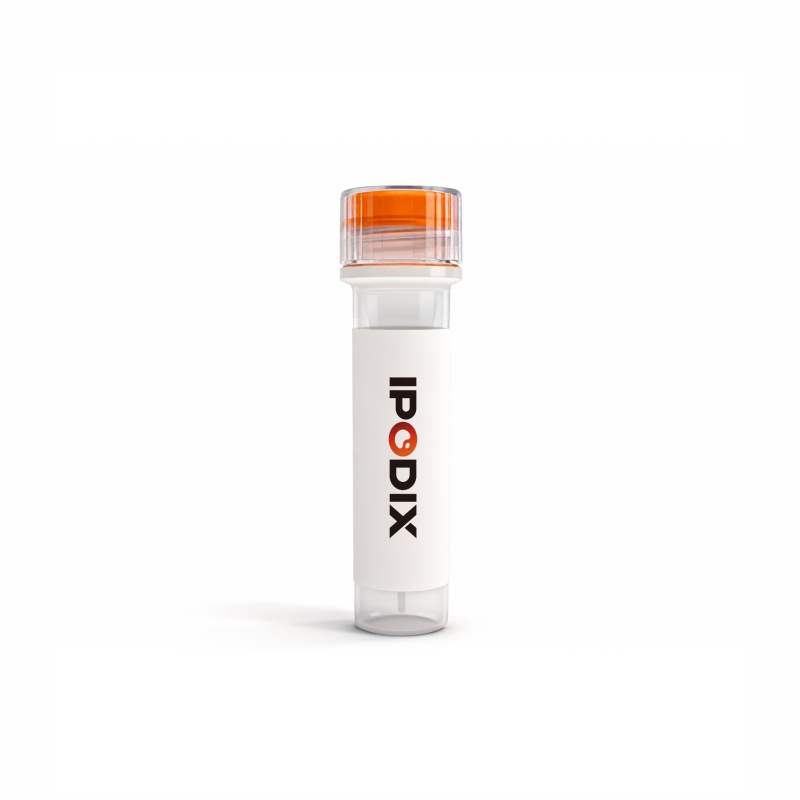
Analytical Data
-
Gene name
GAS8
- Application
-
Alternative Names
GAS8;DRC4;GAS11;Dynein regulatory complex subunit 4
-
Species
Human
-
Source
E. coli
-
Tag
His tag N-Terminus
-
Purity
Greater than 90% as determined by SDS-PAGE.
-
Uniprot
O95995
-
Expression Region
1-478aa
-
AA Sequence
MAPKKKGKKG KAKGTPIVDG LAPEDMSKEQ VEEHVSRIRE ELDREREERN YFQLERDKIH TFWEITRRQL EEKKAELRNK DREMEEAEER HQVEIKVYKQ KVKHLLYEHQ NNLTEMKAEG TVVMKLAQKE HRIQESVLRK DMRALKVELK EQELASEVVV KNLRLKHTEE ITRMRNDFER QVREIEAKYD KKMKMLRDEL DLRRKTELHE VEERKNGQIH TLMQRHEEAF TDIKNYYNDI TLNNLALINS LKEQMEDMRK KEDHLEREMA EVSGQNKRLA DPLQKAREEM SEMQKQLANY ERDKQILLCT KARLKVREKE LKDLQWEHEV LEQRFTKVQQ ERDELYRKFT AAIQEVQQKT GFKNLVLERK LQALSAAVEK KEVQFNEVLA ASNLDPAALT LVSRKLEDVL ESKNSTIKDL QYELAQVCKA HNDLLRTYEA KLLAFGIPLD NVGFKPLETA VIGQTLGQGP AGLVGTPT
-
Molecular Weight
56.3 kDa
-
Endotoxin
< 1.0 EU per μg protein as determined by the LAL method.
-
Form
Freeze-dried powder
-
Buffer formulation
PBS, pH7.4, containing 0.01% SKL, 1mM DTT, 5% Trehalose and Proclin300.
-
Reconstitution
Reconstitute in ddH2O to a concentration of 0.1-0.5 mg/mL. Do not vortex.
- Customization
-
Stability Test
The thermal stability is described by the loss rate. The loss rate was determined by accelerated thermal degradation test, that is, incubate the protein at 37℃ for 48h, and no obvious degradation and precipitation were observed. The loss rate isless than 8% within the expiration date under appropriate storage condition.
-
Storage & Shelf Life
Samples are stable for up to twelve months from date of receipt at -20℃ to -80℃. Store it under sterile conditions at -20℃ to -80℃. It is recommended that the protein be aliquoted for optimal storage. Avoid repeated freeze-thaw cycles.
-
Shipping
In general, recombinant proteins are supplied as lyophilized powder and shipped at ambient temperature. For bulk packages, the proteins are provided as frozen liquid and shipped with blue ice, unless otherwise requested by the customer.
Quality inspection process

Related Products
Protein Description
GAS8, or G antigen of 8, is a member of the cancer/testis (CT) antigen family, which is primarily expressed in the germ cells of the testis and various malignancies, making it a candidate for cancer immunotherapy. Its expression in tumors but not in normal somatic tissues suggests a potential role in tumorigenesis, providing an opportunity for developing targeted therapies. The GAS8 protein has garnered attention due to its immunogenic properties, which can prompt strong immune responses in cancer patients. Research has focused on the characterization of GAS8, including its structure, function, and the mechanisms by which it may promote tumor growth or survival. This involves studying its expression patterns in different types of cancers, as well as its interactions with immune cells. Additionally, efforts are being made to explore the potential of GAS8 as a biomarker for cancer diagnosis and prognosis, as well as its viability as a target for vaccine development. Understanding the role of GAS8 in the tumor microenvironment and its implications in cancer therapy could provide insights into innovative approaches for treating malignancies, enhancing the specificity and efficacy of immune-mediated interventions. Overall, the research surrounding GAS8-recombinant protein aims to unlock its clinical potential and improve therapeutic strategies for cancer patients.







