

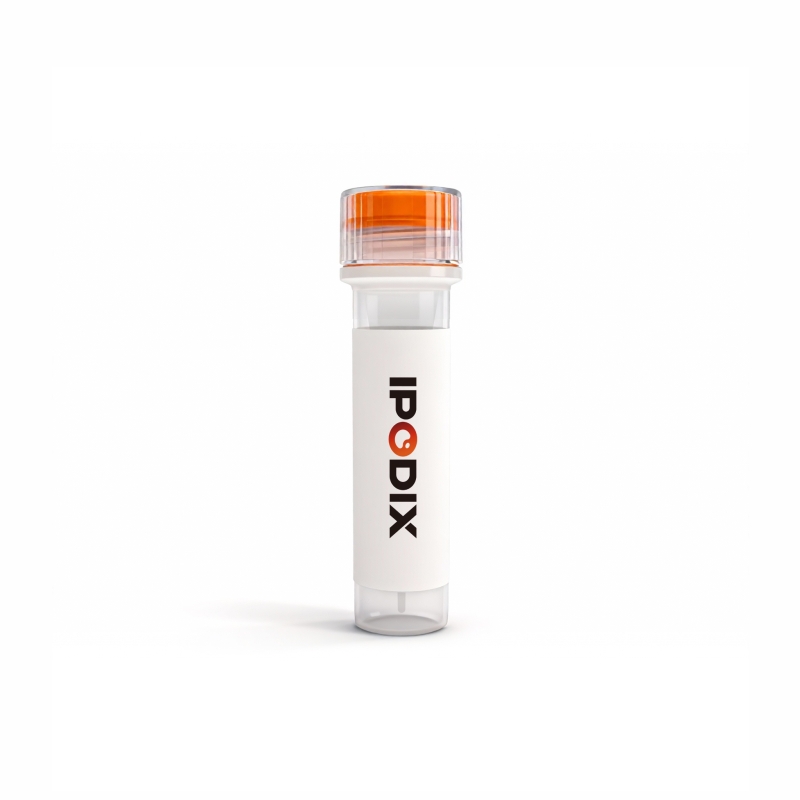
Analytical Data
-
Gene name
NFKBIB
- Application
-
Alternative Names
NKIRAS1;KBRAS1;NF-kappa-B inhibitor-interacting Ras-like Protein 1
-
Species
Human
-
Source
E. coli
-
Tag
His tag N-Terminus
-
Purity
Greater than 90% as determined by SDS-PAGE.
-
Uniprot
Q15653
-
Expression Region
1-356aa
-
AA Sequence
MGSSHHHHHH SSGLVPRGSH MGSHMAGVAC LGKAADADEW CDSGLGSLGP DAAAPGGPGL GAELGPGLSW APLVFGYVTE DGDTALHLAV IHQHEPFLDF LLGFSAGTEY MDLQNDLGQT ALHLAAILGE TSTVEKLYAA GAGLCVAERR GHTALHLACR VGAHACARAL LQPRPRRPRE APDTYLAQGP DRTPDTNHTP VALYPDSDLE KEEEESEEDW KLQLEAENYE GHTPLHVAVI HKDVEMVRLL RDAGADLDKP EPTCGRSPLH LAVEAQAADV LELLLRAGAN PAARMYGGRT PLGSAMLRPN PILARLLRAH GAPEPEGEDE KSGPCSSSSD SDSGDEGDEY DDIVVHSSRS QTRLPPTPAS KPLPDDPRPV
-
Molecular Weight
40 kDa
-
Endotoxin
< 1.0 EU per μg protein as determined by the LAL method.
-
Form
Freeze-dried powder
-
Buffer formulation
PBS, pH7.4, containing 0.01% SKL, 1mM DTT, 5% Trehalose and Proclin300.
-
Reconstitution
Reconstitute in ddH2O to a concentration of 0.1-0.5 mg/mL. Do not vortex.
- Customization
-
Stability Test
The thermal stability is described by the loss rate. The loss rate was determined by accelerated thermal degradation test, that is, incubate the protein at 37℃ for 48h, and no obvious degradation and precipitation were observed. The loss rate isless than 8% within the expiration date under appropriate storage condition.
-
Storage & Shelf Life
Samples are stable for up to twelve months from date of receipt at -20℃ to -80℃. Store it under sterile conditions at -20℃ to -80℃. It is recommended that the protein be aliquoted for optimal storage. Avoid repeated freeze-thaw cycles.
-
Shipping
In general, recombinant proteins are supplied as lyophilized powder and shipped at ambient temperature. For bulk packages, the proteins are provided as frozen liquid and shipped with blue ice, unless otherwise requested by the customer.
Quality inspection process

Related Products
Protein Description
NFKBIB, also known as IκBβ, is a critical inhibitor of the nuclear factor kappa B (NF-κB) signaling pathway, which plays a paramount role in regulating various cellular processes, including inflammation, cell survival, and immune responses. The NF-κB family of transcription factors is implicated in many physiological and pathological conditions, such as cancer, autoimmune diseases, and chronic infections. The function of NFKBIB involves sequestering NF-κB dimers in the cytoplasm, thereby preventing their translocation to the nucleus and subsequent activation of target genes. Research into recombinant NFKBIB proteins has garnered significant interest, as these proteins can serve as tools to understand the regulatory mechanisms of NF-κB signaling. Moreover, recombinant NFKBIB can be utilized in therapeutic strategies aimed at modulating NF-κB activity, potentially offering new avenues for treating diseases characterized by dysregulated inflammation or excessive cell proliferation. Recent advancements in protein expression systems and purification techniques have enabled researchers to produce high-quality recombinant NFKBIB, facilitating in vitro and in vivo studies to unravel its function, regulatory interactions, and impact on disease states. Overall, the study of recombinant NFKBIB encapsulates a promising frontier in understanding NF-κB signaling dynamics and its implications in health and disease.







