

Analytical Data
-
Gene name
ALT
- Application
-
Alternative Names
ALT;C8orf36;MMS21;E3 SUMO-Protein ligase NSE2
-
Species
Mouse
-
Source
E. coli
-
Tag
His tag N-Terminus
-
Purity
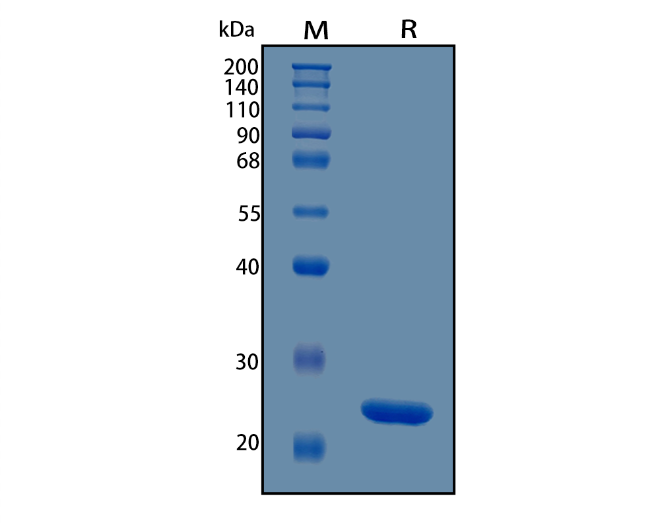
Greater than 90% as determined by SDS-PAGE.
-
Uniprot
Q8QZR5
-
Expression Region
1-496aa
-
AA Sequence
MASQRNDRIQASRNGLKGKVLTLDTMNPCVRRVEYAVRGPIVQRALELEQELRQGVKKPFTEVIRANIGDAQAMGQRPITFFRQVLALCVYPNLLSSPDFPEDAKRRAERILQACGGHSLGAYSISSGIQPIREDVAQYIERRDGGIPADPNNIFLSTGASDAIVTMLKLLVAGEGRARTGVLIPIPQYPLYSAALAELDAVQVDYYLDEERAWALDIAELRRALCQARDRCCPRVLCVINPGNPTGQVQTRECIEAVIRFAFEEGLFLMADEVYQDNVYAEGSQFHSFKKVLTEMGPPYATQQELASFHSVSKGYMGECGFRGGYVEVVNMDAEVQKQMAKLMSVRLCPPVPGQALMGMVVSPPTPSEPSFKQFQAERQEVLAELAAKAKLTEQVFNEAPGIRCNPVQGAMYSFPQIQLPLKAVQRAQDLGLAPDMFFCLCLLEETGICVVPGSGFGQQEGTYHFRMTILPPMEKLRVLLEKLRHFHAKFTHEYS
-
Molecular Weight
56 kDa
-
Endotoxin
< 1.0 EU per μg protein as determined by the LAL method.
-
Form
Freeze-dried powder
-
Buffer formulation
PBS, pH7.4, containing 0.01% SKL, 1mM DTT, 5% Trehalose and Proclin300.
-
Reconstitution
Reconstitute in ddH2O to a concentration of 0.1-0.5 mg/mL. Do not vortex.
- Customization
-
Stability Test
The thermal stability is described by the loss rate. The loss rate was determined by accelerated thermal degradation test, that is, incubate the protein at 37℃ for 48h, and no obvious degradation and precipitation were observed. The loss rate isless than 8% within the expiration date under appropriate storage condition.
-
Storage & Shelf Life
Samples are stable for up to twelve months from date of receipt at -20℃ to -80℃. Store it under sterile conditions at -20℃ to -80℃. It is recommended that the protein be aliquoted for optimal storage. Avoid repeated freeze-thaw cycles.
-
Shipping
In general, recombinant proteins are supplied as lyophilized powder and shipped at ambient temperature. For bulk packages, the proteins are provided as frozen liquid and shipped with blue ice, unless otherwise requested by the customer.
Quality inspection process

Related Products
Protein Description
ALT (Alternative Lengthening of Telomeres) is a critical mechanism by which certain tumors achieve unlimited proliferative potential, circumventing the replicative senescence typically seen in normal somatic cells. Unlike most somatic cells, which rely on the enzyme telomerase for maintaining telomere length, ALT-positive cancer cells utilize a telomerase-independent pathway characterized by the recombination of telomeric sequences. This process involves the acquisition of alternative telomere structures through DNA double-strand break repair mechanisms, particularly homologous recombination. Studies have shown that ALT is prevalent in various malignancies, such as glioblastomas, sarcomas, and certain neuroendocrine tumors, raising the importance of understanding its underlying molecular pathways for potential therapeutic strategies. The characterization of the proteins involved in ALT, including those facilitating DNA repair and telomere maintenance, has become a focal point of cancer research. By investigating ALT-associated proteins and their roles in telomere biology, researchers aim to unveil novel targets for cancer treatment, as targeting the unique aspects of ALT could offer a strategic approach to selectively impairing the growth of ALT-dependent tumors while sparing normal cells. Advances in proteomics and the development of specific inhibitors are accelerating this research, making ALT-related proteins potential biomarkers for diagnosis and prognosis, as well as promising candidates for targeted therapies against ALT-driven cancers.







