

Analytical Data
-
Gene name
BHMT
- Application
-
Alternative Names
BHMT;Betaine--homocysteine S-methyltransferase 1
-
Species
Human
-
Source
E. coli
-
Tag
His tag N-Terminus
-
Purity
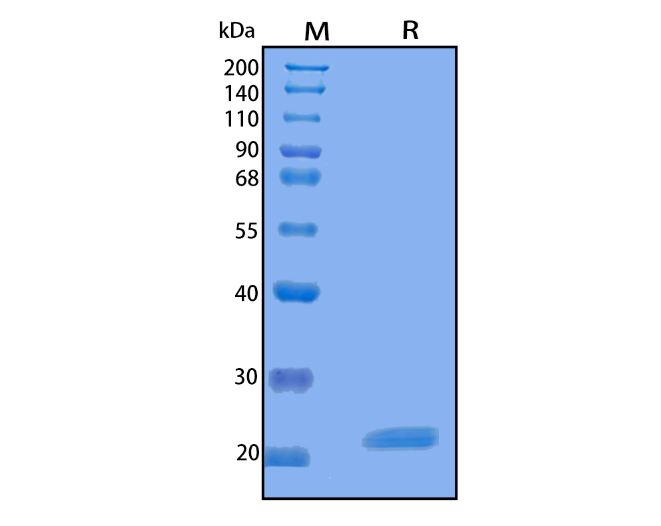
Greater than 90% as determined by SDS-PAGE.
-
Uniprot
Q93088
-
Expression Region
2-406aa
-
AA Sequence
PPVGGKKAK KGILERLNAG EIVIGDGGFV FALEKRGYVK AGPWTPEAAV EHPEAVRQLH REFLRAGSNV MQTFTFYASE DKLENRGNYV LEKISGQEVN EAACDIARQV ADEGDALVAG GVSQTPSYLS CKSETEVKKV FLQQLEVFMK KNVDFLIAEY FEHVEEAVWA VETLIASGKP VAATMCIGPE GDLHGVPPGE CAVRLVKAGA SIIGVNCHFD PTISLKTVKL MKEGLEAARL KAHLMSQPLA YHTPDCNKQG FIDLPEFPFG LEPRVATRWD IQKYAREAYN LGVRYIGGCC GFEPYHIRAI AEELAPERGF LPPASEKHGS WGSGLDMHTK PWVRARARKE YWENLRIASG RPYNPSMSKP DGWGVTKGTA ELMQQKEATT EQQLKELFEK QKFKSQ
-
Endotoxin
< 1.0 EU per μg protein as determined by the LAL method.
-
Form
Freeze-dried powder
-
Buffer formulation
PBS, pH7.4, containing 0.01% SKL, 1mM DTT, 5% Trehalose and Proclin300.
-
Reconstitution
Reconstitute in ddH2O to a concentration of 0.1-0.5 mg/mL. Do not vortex.
- Customization
-
Stability Test
The thermal stability is described by the loss rate. The loss rate was determined by accelerated thermal degradation test, that is, incubate the protein at 37℃ for 48h, and no obvious degradation and precipitation were observed. The loss rate isless than 8% within the expiration date under appropriate storage condition.
-
Storage & Shelf Life
Samples are stable for up to twelve months from date of receipt at -20℃ to -80℃. Store it under sterile conditions at -20℃ to -80℃. It is recommended that the protein be aliquoted for optimal storage. Avoid repeated freeze-thaw cycles.
-
Shipping
In general, recombinant proteins are supplied as lyophilized powder and shipped at ambient temperature. For bulk packages, the proteins are provided as frozen liquid and shipped with blue ice, unless otherwise requested by the customer.
Quality inspection process

Related Products
Protein Description
Betaine-homocysteine S-methyltransferase (BHMT) is a crucial enzyme involved in the methylation cycle, which plays a significant role in transferring methyl groups to homocysteine to form methionine, an essential amino acid. The study of recombinant BHMT is driven by its potential implications in human health, particularly in relation to cardiovascular diseases, neurodegenerative disorders, and metabolic syndromes that are linked to homocysteine levels. Elevated homocysteine is implicated in various pathologies, including atherosclerosis and Alzheimer's disease, underscoring the importance of understanding BHMT's function in regulating homocysteine metabolism. Recombinant BHMT can be produced using various expression systems, allowing researchers to investigate its biochemical properties, enzymatic activity, and regulatory mechanisms in detail. Additionally, the recombinant form provides a valuable tool for studying the effects of genetic variations in the BHMT gene and their association with disease susceptibility. Understanding the structure and function of BHMT may pave the way for novel therapeutic strategies aimed at modulating homocysteine levels and improving clinical outcomes in affected individuals. The development of BHMT as a recombinant protein also has implications in the fields of metabolic engineering and synthetic biology, where it could potentially be utilized in designing biotechnological applications that enhance methylation processes in various organisms. Overall, the research on recombinant BHMT is essential for elucidating its biological significance and potential as a target for therapeutic intervention, highlighting its relevance in the study of human health and disease.







