

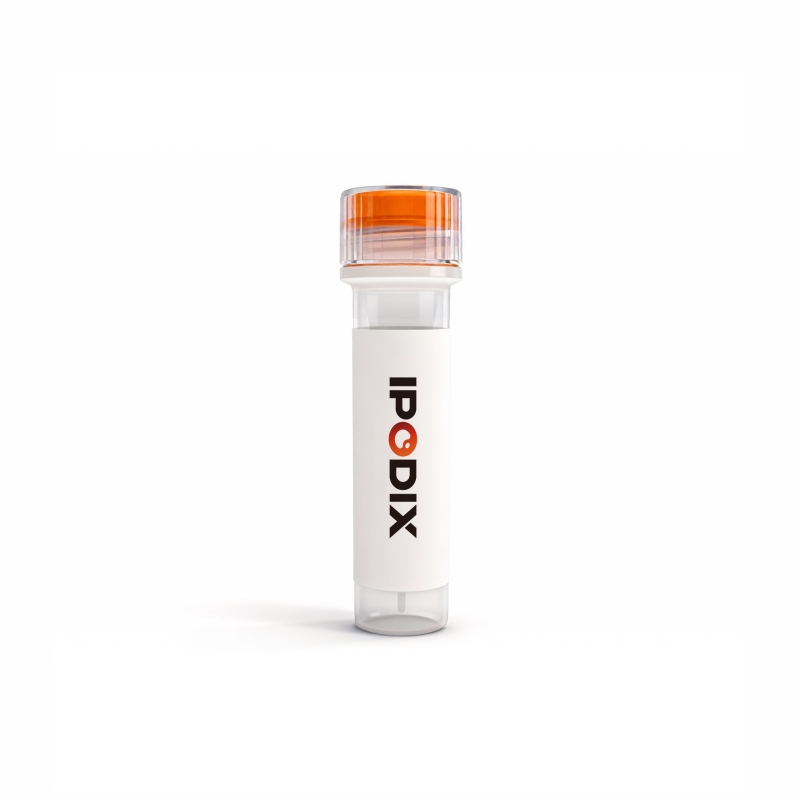
Analytical Data
-
Gene name
sar
- Application
-
Alternative Names
rRNA endonuclease
-
Species
Aspergillus giganteus
-
Source
E. coli
-
Tag
N- His & C- Myc
-
Purity
Greater than 90% as determined by SDS-PAGE.
-
Uniprot
P00655
-
Expression Region
28-177aa
-
Molecular Weight
25.2 kDa
-
Endotoxin
< 1.0 EU per μg protein as determined by the LAL method.
-
Form
Freeze-dried powder
-
Buffer formulation
PBS, pH7.4, containing 0.01% SKL, 1mM DTT, 5% Trehalose and Proclin300.
-
Reconstitution
Reconstitute in ddH2O to a concentration of 0.1-0.5 mg/mL. Do not vortex.
- Customization
-
Stability Test
The thermal stability is described by the loss rate. The loss rate was determined by accelerated thermal degradation test, that is, incubate the protein at 37℃ for 48h, and no obvious degradation and precipitation were observed. The loss rate isless than 8% within the expiration date under appropriate storage condition.
-
Storage & Shelf Life
Samples are stable for up to twelve months from date of receipt at -20℃ to -80℃. Store it under sterile conditions at -20℃ to -80℃. It is recommended that the protein be aliquoted for optimal storage. Avoid repeated freeze-thaw cycles.
-
Shipping
In general, recombinant proteins are supplied as lyophilized powder and shipped at ambient temperature. For bulk packages, the proteins are provided as frozen liquid and shipped with blue ice, unless otherwise requested by the customer.
Quality inspection process

Related Products
Protein Description
SAR (Structure-Activity Relationship) protein reconstruction is an emerging area of research in the field of molecular biology and drug development. It focuses on understanding how the structural features of proteins correlate with their biological activity. This understanding is crucial for the design and optimization of pharmaceutical compounds. Historically, the development of drugs has been hindered by the lack of knowledge about protein structures and their functions, which can vary significantly even among closely related species. SAR studies involve the systematic alteration of protein structures to evaluate how these changes affect their interaction with potential drug molecules. Advanced techniques such as X-ray crystallography, NMR spectroscopy, and cryo-electron microscopy aid in elucidating protein structures in atomic detail, while computational tools facilitate the prediction of how modifications can enhance or inhibit protein function. Moreover, the integration of bioinformatics and machine learning is revolutionizing SAR research, allowing scientists to analyze large datasets and identify patterns that inform rational drug design. As a result, the study of SAR in proteins not only enhances our fundamental understanding of biological processes but also accelerates the development of targeted therapies for a range of diseases, including cancer, neurological disorders, and infectious diseases. This research is increasingly vital as the pharmaceutical industry seeks to develop more effective and personalized treatments, making SAR protein reconstruction a key focus for future innovations in drug discovery.







