

Analytical Data
-
Gene name
HSD17B7
- Application
-
Alternative Names
HSD17B7; 17HSD7; SDR37C1; UNQ2563/PRO6243; 3-keto-steroid reductase/17-beta-hydroxysteroid dehydrogenase 7; 17-beta-hydroxysteroid dehydrogenase 7; 17-beta-HSD 7; 3-keto-steroid reductase; Dihydrotestosterone oxidoreductase
-
Species
Human
-
Source
E. coli
-
Tag
GST-tag at N-terminal
-
Purity
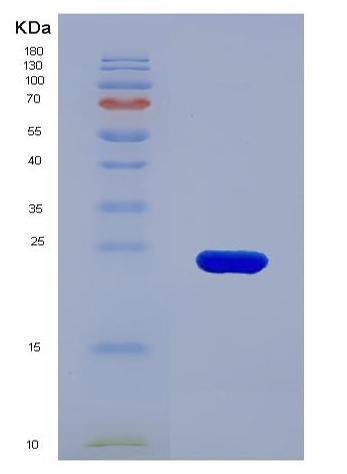
Greater than 90% as determined by SDS-PAGE.
-
Uniprot
P56937
-
Expression Region
1-341aa
-
AA Sequence
MRKVVLITGASSGIGLALCKRLLAEDDELHLCLACRNMSKAEAVCAALLASHPTAEVTIVQVDVSNLQSVFRASKELKQRFQRLDCIYLNAGIMPNPQLNIKALFFGLFSRKVIHMFSTAEGLLTQGDKITADGLQEVFETNVFGHFILIRELEPLLCHSDNPSQLIWTSSRSARKSNFSLEDFQHSKGKEPYSSSKYATDLLSVALNRNFNQQGLYSNVACPGTALTNLTYGILPPFIWTLLMPAILLLRFFANAFTLTPYNGTEALVWLFHQKPESLNPLIKYLSATTGFGRNYIMTQKMDLDEDTAEKFYQKLLELEKHIRVTIQKTDNQARLSGSCL
-
Molecular Weight
64.6 kDa
-
Endotoxin
< 1.0 EU per μg protein as determined by the LAL method.
-
Form
Freeze-dried powder
-
Buffer formulation
PBS, pH7.4, containing 0.01% SKL, 1mM DTT, 5% Trehalose and Proclin300.
-
Reconstitution
Reconstitute in ddH2O to a concentration of 0.1-0.5 mg/mL. Do not vortex.
- Customization
-
Stability Test
The thermal stability is described by the loss rate. The loss rate was determined by accelerated thermal degradation test, that is, incubate the protein at 37℃ for 48h, and no obvious degradation and precipitation were observed. The loss rate isless than 8% within the expiration date under appropriate storage condition.
-
Storage & Shelf Life
Samples are stable for up to twelve months from date of receipt at -20℃ to -80℃. Store it under sterile conditions at -20℃ to -80℃. It is recommended that the protein be aliquoted for optimal storage. Avoid repeated freeze-thaw cycles.
-
Shipping
In general, recombinant proteins are supplied as lyophilized powder and shipped at ambient temperature. For bulk packages, the proteins are provided as frozen liquid and shipped with blue ice, unless otherwise requested by the customer.
Quality inspection process

Related Products
Protein Description
HSD17B7, or hydroxysteroid 17-beta dehydrogenase 7, is an important enzyme involved in the biosynthesis of steroid hormones and cholesterol. Its primary function is to facilitate the conversion of ionone derivatives to their corresponding alcohols, which is crucial in the metabolic pathways of sex steroids and other physiological processes. The study of HSD17B7 has gained significant attention in the fields of endocrinology and biochemistry due to its potential implications in various diseases, including metabolic disorders, reproductive health issues, and certain cancers. Recombinant protein technology has emerged as an essential tool to investigate the structure and function of HSD17B7. By expressing the enzyme in host systems such as bacteria or yeast, researchers can obtain purified protein for functional studies, crystallization, and structural analyses. Understanding the activity and regulation of HSD17B7 through these recombinant studies may provide insights into its role in disease mechanisms and identify potential therapeutic targets. Furthermore, the development of HSD17B7 inhibitors may open new avenues for treating hormone-related conditions. Thus, research on recombinant HSD17B7 not only enhances our understanding of steroid metabolism but also offers promising prospects for clinical applications in managing related health issues.







