

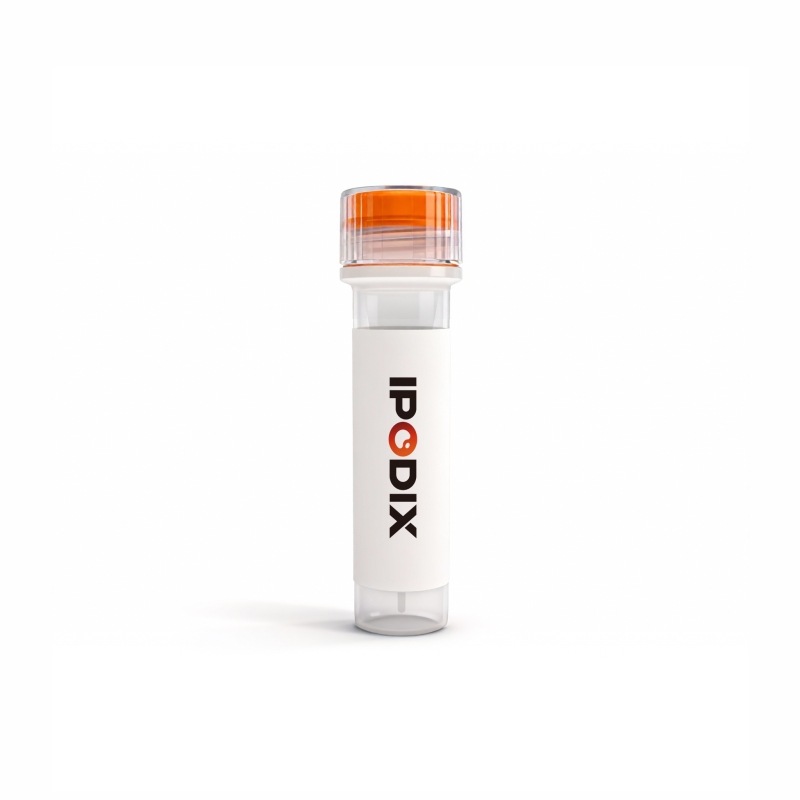
Analytical Data
-
Gene name
acrR
- Application
-
Species
Shigella sonnei
-
Source
E. coli
-
Tag
N- His & C- Myc
-
Purity
Greater than 90% as determined by SDS-PAGE.
-
Uniprot
Q3Z4T5
-
Expression Region
1-215aa
-
Molecular Weight
32.2 kDa
-
Endotoxin
< 1.0 EU per μg protein as determined by the LAL method.
-
Form
Freeze-dried powder
-
Buffer formulation
PBS, pH7.4, containing 0.01% SKL, 1mM DTT, 5% Trehalose and Proclin300.
-
Reconstitution
Reconstitute in ddH2O to a concentration of 0.1-0.5 mg/mL. Do not vortex.
- Customization
-
Stability Test
The thermal stability is described by the loss rate. The loss rate was determined by accelerated thermal degradation test, that is, incubate the protein at 37℃ for 48h, and no obvious degradation and precipitation were observed. The loss rate isless than 8% within the expiration date under appropriate storage condition.
-
Storage & Shelf Life
Samples are stable for up to twelve months from date of receipt at -20℃ to -80℃. Store it under sterile conditions at -20℃ to -80℃. It is recommended that the protein be aliquoted for optimal storage. Avoid repeated freeze-thaw cycles.
-
Shipping
In general, recombinant proteins are supplied as lyophilized powder and shipped at ambient temperature. For bulk packages, the proteins are provided as frozen liquid and shipped with blue ice, unless otherwise requested by the customer.
Quality inspection process

Related Products
Protein Description
The AcrR protein is a crucial regulator of the AcrAB-TolC efflux pump system in Escherichia coli, which is responsible for the extrusion of a wide range of toxic compounds, including antibiotics and other harmful substances. The emergence of antibiotic resistance in bacterial pathogens has become a global health concern, necessitating a deeper understanding of the mechanisms that confer resistance. AcrR, a transcriptional repressor, plays a vital role in modulating the expression of the AcrAB-TolC system in response to environmental signals. Recent studies have highlighted that mutations or alterations in the AcrR protein can lead to increased efflux pump activity and contribute to multidrug resistance. Thus, investigating the structure, function, and regulatory mechanisms of AcrR is essential for developing novel strategies to combat antibiotic resistance. By employing techniques such as site-directed mutagenesis and crystallography, researchers aim to elucidate the molecular interactions and conformational changes that occur upon ligand binding or stress responses, providing insights into the regulatory network controlling acrAB expression. Understanding the intricacies of AcrR can facilitate the design of inhibitors to restore the efficacy of existing antibiotics, representing a promising approach in the fight against resistant bacterial strains.







