

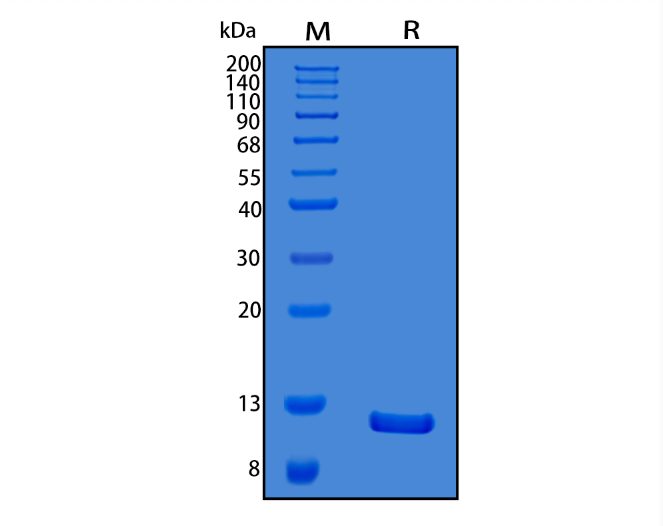
Analytical Data
-
Gene name
Hyp
- Application
-
Alternative Names
Hyp;PEX;Phosphate-regulating neutral endopeptidase PHEX
-
Species
Human
-
Source
E. coli
-
Tag
His tag N-Terminus
-
Purity
Greater than 90% as determined by SDS-PAGE.
-
Uniprot
P78562
-
Expression Region
1-749aa
-
AA Sequence
MEAETGSSVETGKKANRGTRIALVVFVGGTLVLGTILFLVSQGLLSLQAKQEYCLKPECIEAAAAILSKVNLSVDPCDNFFRFACDGWISNNPIPEDMPSYGVYPWLRHNVDLKLKELLEKSISRRRDTEAIQKAKILYSSCMNEKAIEKADAKPLLHILRHSPFRWPVLESNIGPEGVWSERKFSLLQTLATFRGQYSNSVFIRLYVSPDDKASNEHILKLDQATLSLAVREDYLDNSTEAKSYRDALYKFMVDTAVLLGANSSRAEHDMKSVLRLEIKIAEIMIPHENRTSEAMYNKMNISELSAMIPQFDWLGYIKKVIDTRLYPHLKDISPSENVVVRVPQYFKDLFRILGSERKKTIANYLVWRMVYSRIPNLSRRFQYRWLEFSRVIQGTTTLLPQWDKCVNFIESALPYVVGKMFVDVYFQEDKKEMMEELVEGVRWAFIDMLEKENEWMDAGTKRKAKEKARAVLAKVGYPEFIMNDTHVNEDLKAIKFSEADYFGNVLQTRKYLAQSDFFWLRKAVPKTEWFTNPTTVNAFYSASTNQIRFPAGELQKPFFWGTEYPRSLSYGAIGVIVGHEFTHGFDNNGRKYDKNGNLDPWWSTESEEKFKEKTKCMINQYSNYYWKKAGLNVKGKRTLGENIADNGGLREAFRAYRKWINDRRQGLEEPLLPGITFTNNQLFFLSYAHVRCNSYRPEAAREQVQIGAHSPPQFRVNGAISNFEEFQKAFNCPPNSTMNRGMDSCRLW
-
Molecular Weight
86.4 kDa
-
Endotoxin
< 1.0 EU per μg protein as determined by the LAL method.
-
Form
Freeze-dried powder
-
Buffer formulation
PBS, pH7.4, containing 0.01% SKL, 1mM DTT, 5% Trehalose and Proclin300.
-
Reconstitution
Reconstitute in ddH2O to a concentration of 0.1-0.5 mg/mL. Do not vortex.
- Customization
-
Stability Test
The thermal stability is described by the loss rate. The loss rate was determined by accelerated thermal degradation test, that is, incubate the protein at 37℃ for 48h, and no obvious degradation and precipitation were observed. The loss rate isless than 8% within the expiration date under appropriate storage condition.
-
Storage & Shelf Life
Samples are stable for up to twelve months from date of receipt at -20℃ to -80℃. Store it under sterile conditions at -20℃ to -80℃. It is recommended that the protein be aliquoted for optimal storage. Avoid repeated freeze-thaw cycles.
-
Shipping
In general, recombinant proteins are supplied as lyophilized powder and shipped at ambient temperature. For bulk packages, the proteins are provided as frozen liquid and shipped with blue ice, unless otherwise requested by the customer.
Quality inspection process

Related Products
Protein Description
Hyp recombinant proteins, derived from the hydroxyproline-rich glycoprotein family, have garnered significant interest in biomedical research due to their potential applications in various fields, including tissue engineering, regenerative medicine, and drug delivery. Hydroxyproline (Hyp) is a non-standard amino acid often found in collagen and gelatin, which are critical components of the extracellular matrix. The unique properties of Hyp-rich proteins, such as their structural stability and biocompatibility, make them ideal candidates for developing biomaterials that can support cell adhesion and proliferation. Moreover, the ability to engineer these proteins through recombinant DNA technology enables the production of variants with tailored functionalities, enhancing their therapeutic potential. Research on Hyp recombinant proteins aims to elucidate their roles in biological processes, improve their production methods, and explore their interactions with cells and tissues. Additionally, studies focus on optimizing their properties for specific applications, such as promoting wound healing, supporting cartilage regeneration, and serving as scaffolds for tissue engineering. The continued exploration of Hyp recombinant proteins holds promise for advancing innovative solutions in biotechnology and medicine.







