

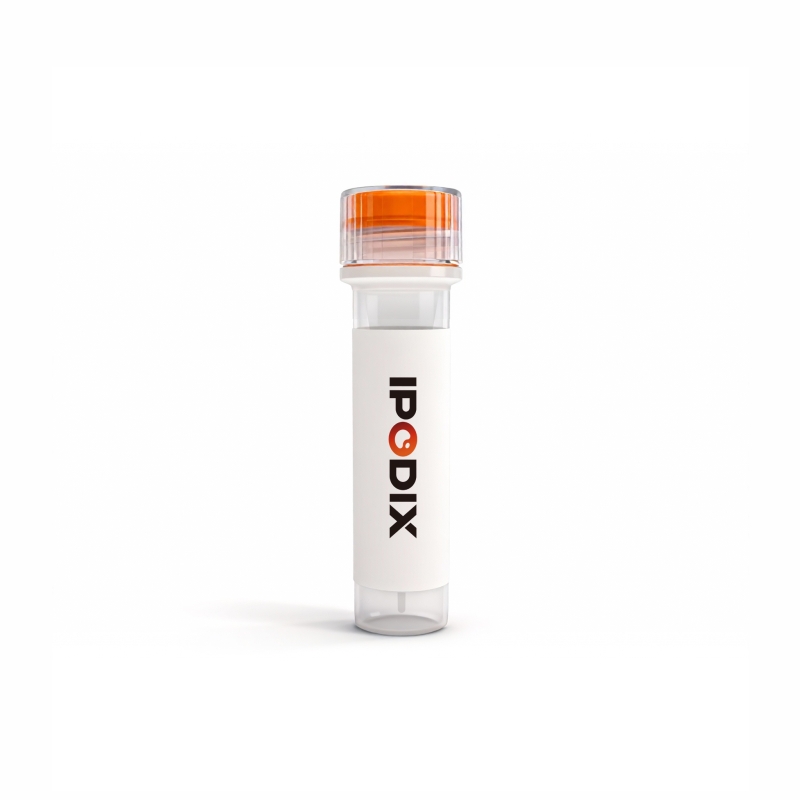
Analytical Data
-
Gene name
oprI
- Application
-
Species
Pseudomonas aeruginosa
-
Source
E. coli
-
Tag
N- His
-
Purity
Greater than 90% as determined by SDS-PAGE.
-
Uniprot
P11221
-
Expression Region
20-83aa
-
Molecular Weight
12.9 kDa
-
Endotoxin
< 1.0 EU per μg protein as determined by the LAL method.
-
Form
Freeze-dried powder
-
Buffer formulation
PBS, pH7.4, containing 0.01% SKL, 1mM DTT, 5% Trehalose and Proclin300.
-
Reconstitution
Reconstitute in ddH2O to a concentration of 0.1-0.5 mg/mL. Do not vortex.
- Customization
-
Stability Test
The thermal stability is described by the loss rate. The loss rate was determined by accelerated thermal degradation test, that is, incubate the protein at 37℃ for 48h, and no obvious degradation and precipitation were observed. The loss rate isless than 8% within the expiration date under appropriate storage condition.
-
Storage & Shelf Life
Samples are stable for up to twelve months from date of receipt at -20℃ to -80℃. Store it under sterile conditions at -20℃ to -80℃. It is recommended that the protein be aliquoted for optimal storage. Avoid repeated freeze-thaw cycles.
-
Shipping
In general, recombinant proteins are supplied as lyophilized powder and shipped at ambient temperature. For bulk packages, the proteins are provided as frozen liquid and shipped with blue ice, unless otherwise requested by the customer.
Quality inspection process

Related Products
Protein Description
OprI, a porin protein derived from the outer membrane of Pseudomonas aeruginosa, plays a significant role in the bacterium's ability to transport small molecules, including nutrients and antimicrobial agents. This protein is of particular interest due to its potential as a target for drug development, especially in the context of antibiotic resistance, which is a pressing global health concern. Research has shown that OprI is implicated in biofilm formation and the pathogenicity of Pseudomonas aeruginosa, making it a key factor in chronic infections, particularly in immunocompromised patients and those with cystic fibrosis. The recombinant expression of OprI in suitable host systems allows for the study of its structure and function, facilitating the exploration of its interactions with both bacterial and host cells. By utilizing modern techniques such as site-directed mutagenesis and high-resolution crystallography, scientists aim to elucidate the mechanisms underlying OprI's transport functions and its role in infection. The insights gained from these studies not only enhance our understanding of bacterial physiology but also open new avenues for developing novel therapeutics aimed at combating infections caused by multidrug-resistant bacteria. Therefore, OprI stands as a promising candidate in the ongoing battle against antibiotic resistance, emphasizing the need for continued research in this area.







