

Analytical Data
-
Gene name
CASQ2
- Application
-
Alternative Names
PDIB2; Cardiac Muscle Calsequestrin; Calsequestrin, cardiac muscle isoform
-
Species
Mouse
-
Source
E. coli
-
Tag
N-His
-
Purity
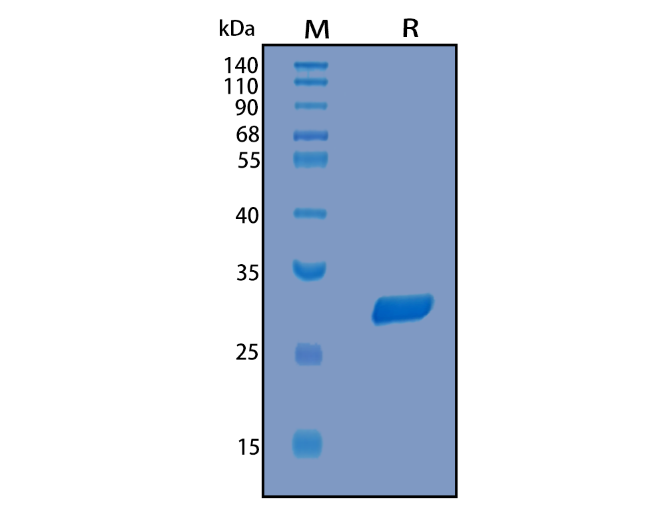
Greater than 90% as determined by SDS-PAGE.
-
Uniprot
O09161
-
Expression Region
Glu20~Lys320
-
Molecular Weight
39.0kDa
-
Endotoxin
< 1.0 EU per μg protein as determined by the LAL method.
-
Form
Freeze-dried powder
-
Buffer formulation
PBS, pH7.4, containing 0.01% SKL, 1mM DTT, 5% Trehalose and Proclin300.
-
Reconstitution
Reconstitute in ddH2O to a concentration of 0.1-0.5 mg/mL. Do not vortex.
- Customization
-
Stability Test
The thermal stability is described by the loss rate. The loss rate was determined by accelerated thermal degradation test, that is, incubate the protein at 37℃ for 48h, and no obvious degradation and precipitation were observed. The loss rate isless than 8% within the expiration date under appropriate storage condition.
-
Storage & Shelf Life
Samples are stable for up to twelve months from date of receipt at -20℃ to -80℃. Store it under sterile conditions at -20℃ to -80℃. It is recommended that the protein be aliquoted for optimal storage. Avoid repeated freeze-thaw cycles.
-
Shipping
In general, recombinant proteins are supplied as lyophilized powder and shipped at ambient temperature. For bulk packages, the proteins are provided as frozen liquid and shipped with blue ice, unless otherwise requested by the customer.
Quality inspection process

Related Products
Protein Description
CASQ2, or Calsequestrin 2, is an important calcium-binding protein primarily found in cardiac and skeletal muscle cells, where it plays a critical role in calcium homeostasis and muscle contraction. Mutations in the CASQ2 gene have been linked to catecholaminergic polymorphic ventricular tachycardia (CPVT), a serious cardiac arrhythmia that can lead to syncope or sudden cardiac death, particularly in young individuals. The study of CASQ2 recombinant proteins offers insights into the biochemical and physiological functions of this protein, facilitating a better understanding of the molecular mechanisms underlying cardiac excitability and contractility. Research on CASQ2 is particularly relevant for developing therapeutic strategies to address CPVT and other calcium-related cardiac disorders. By producing and characterizing CASQ2 recombinant proteins, scientists can investigate the structural properties of the protein, its interaction with other calcium handling proteins, and the impact of specific mutations on its function. Furthermore, recombinant CASQ2 can be utilized in in vitro systems to evaluate drug interactions and potential treatments for heart rhythm disorders, making it a valuable tool in both basic and applied cardiovascular research. Understanding CASQ2 at the molecular level not only broadens our comprehension of cardiac physiology but also aids in the development of targeted therapies, thereby improving patient outcomes in those affected by cardiac arrhythmias associated with CASQ2 mutations.







