

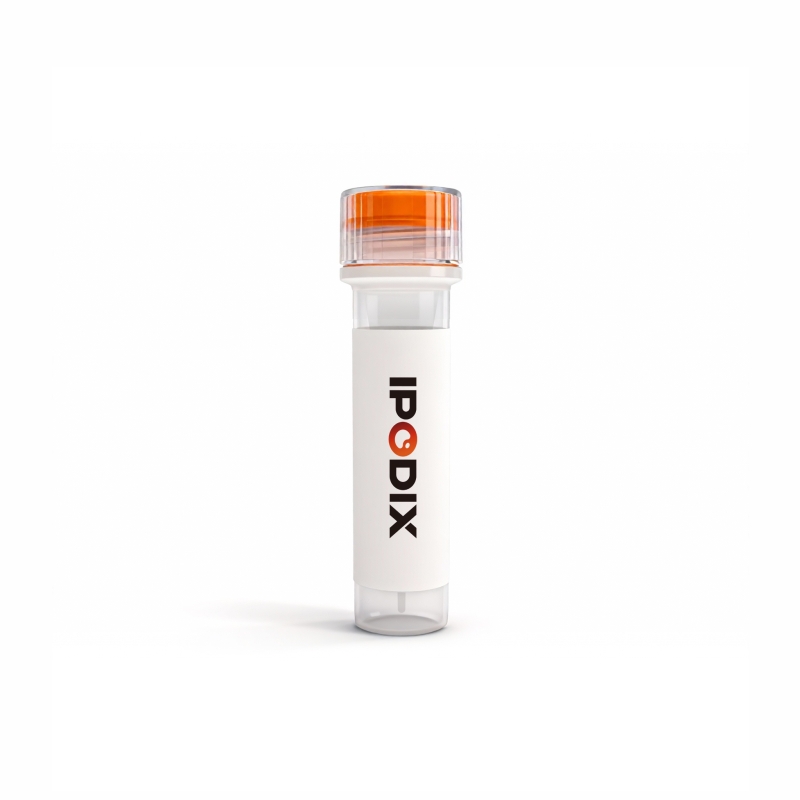
Analytical Data
-
Gene name
OLFM2
- Application
-
Alternative Names
Neuronal olfactomedin related ER localized protein 2; NOE2; NOE2_HUMAN; Noelin 2; Noelin-2; NOELIN2; NOELIN2 V1; Olfactomedin 2; Olfactomedin-2; OlfC; Olfm2
-
Species
Human
-
Source
E. coli
-
Tag
His tag N-Terminus
-
Purity
Greater than 90% as determined by SDS-PAGE.
-
Uniprot
O95897
-
Expression Region
21-454 aa
-
AA Sequence
QTLFQNPEEG WQLYTSAQAP DGKCICTAVI PAQSTCSRDG RSRELRQLME KVQNVSQSME VLELRTYRDL QYVRGMETLM RSLDARLRAA DGSLSAKSFQ ELKDRMTELL PLSSVLEQYK ADTRTIVRLR EEVRNLSGSL AAIQEEMGAY GYEDLQQRVM ALEARLHACA QKLGCGKLTG VSNPITVRAM GSRFGSWMTD TMAPSADSRV WYMDGYYKGR RVLEFRTLGD FIKGQNFIQH LLPQPWAGTG HVVYNGSLFY NKYQSNVVVK YHFRSRSVLV QRSLPGAGYN NTFPYSWGGF SDMDFMVDES GLWAVYTTNQ NAGNIVVSRL DPHTLEVMRS WDTGYPKRSA GEAFMICGVL YVTNSHLAGA KVYFAYFTNT SSYEYTDVPF HNQYSHISML DYNPRERALY TWNNGHQVLY NVTLFHVIST SGDP
-
Molecular Weight
51.3 kDa
-
Endotoxin
< 1.0 EU per μg protein as determined by the LAL method.
-
Form
Freeze-dried powder
-
Buffer formulation
PBS, pH7.4, containing 0.01% SKL, 1mM DTT, 5% Trehalose and Proclin300.
-
Reconstitution
Reconstitute in ddH2O to a concentration of 0.1-0.5 mg/mL. Do not vortex.
- Customization
-
Stability Test
The thermal stability is described by the loss rate. The loss rate was determined by accelerated thermal degradation test, that is, incubate the protein at 37℃ for 48h, and no obvious degradation and precipitation were observed. The loss rate isless than 8% within the expiration date under appropriate storage condition.
-
Storage & Shelf Life
Samples are stable for up to twelve months from date of receipt at -20℃ to -80℃. Store it under sterile conditions at -20℃ to -80℃. It is recommended that the protein be aliquoted for optimal storage. Avoid repeated freeze-thaw cycles.
-
Shipping
In general, recombinant proteins are supplied as lyophilized powder and shipped at ambient temperature. For bulk packages, the proteins are provided as frozen liquid and shipped with blue ice, unless otherwise requested by the customer.
Quality inspection process

Related Products
Protein Description
OLFM2 (Olfactory Factor M2) is a member of the olfactomedin protein family, which has been implicated in various physiological and pathological processes, including neural development and tumorigenesis. Research has indicated that OLFM2 plays a critical role in the regulation of cell proliferation and differentiation, particularly in neural and cancer cells. Its expression is often altered in malignancies, suggesting potential roles in oncogenesis and tumor progression. The interest in OLFM2 as a recombinant protein stems from its unique properties, which include glycosylation and a predicted ability to interact with other proteins or cellular components. Understanding the structure and function of OLFM2 at a molecular level could provide insights into its biological roles and therapeutic potential. The development of recombinant OLFM2 allows for detailed studies of its biological functions and mechanisms of action, offering opportunities for therapeutic applications, particularly in cancer treatment and regeneration of neural tissues. Additionally, elucidating the signaling pathways and interaction networks associated with OLFM2 may pave the way for novel diagnostic and therapeutic strategies, highlighting the importance of this protein in both basic and applied biomedical research.







