

Analytical Data
-
Gene name
PKCi
-
简介
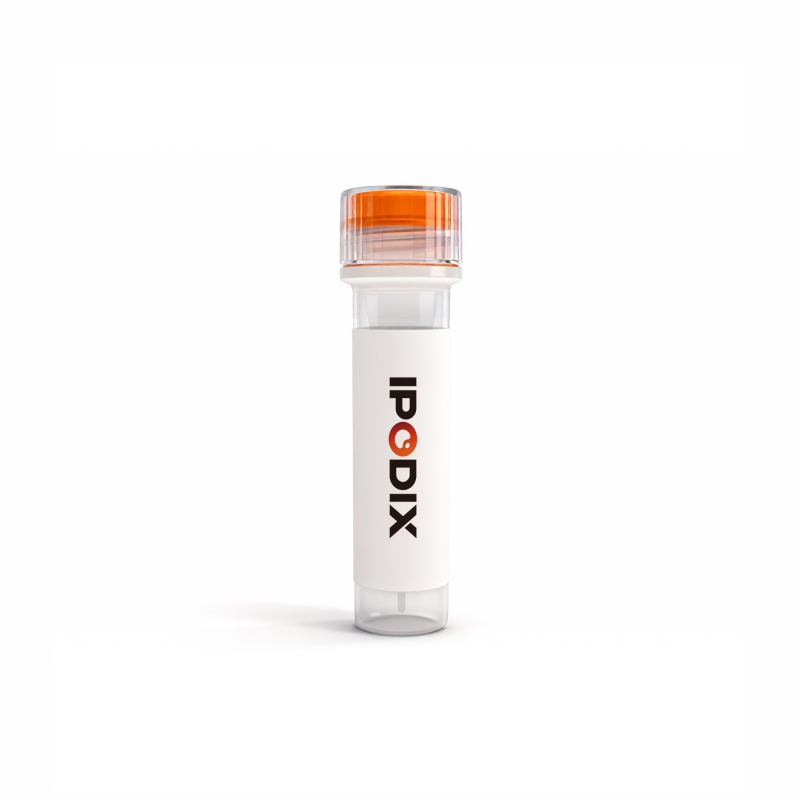
PKCi protein has adenosine 5'-monophosphate amidase activity and can hydrolyze compounds such as AMP-NH2. It also acts on AMP-morpholidate, GMP-morpholidate, lysyl-AMP, Met-AMP, His-AMP, Asp-AMP, lysyl-GMP and AMP-N-alanine methyl ester. PKCi Protein, Human (H114A, His) is the recombinant human-derived PKCi protein, expressed by E. coli , with N-6*His labeled tag.
- Application
-
Alternative Names
HINT1; Adenosine 5'-monophosphoramidase HINT1; Desumoylating isopeptidase HINT1; Histidine triad nucleotide-binding protein 1; Protein kinase C inhibitor 1; Protein kinase C-interacting protein 1; PKCI-1
-
Species
Human
-
Source
E. coli
-
Tag
N-6*His
-
Purity
Greater than 90% as determined by SDS-PAGE.
-
Uniprot
P49773
-
Expression Region
M1-G126, H114A
-
Protein Length
Full Length
-
Endotoxin
< 1.0 EU per μg protein as determined by the LAL method.
-
Form
Freeze-dried powder
-
Buffer formulation
PBS, pH7.4, containing 0.01% SKL, 1mM DTT, 5% Trehalose and Proclin300.
-
Reconstitution
Reconstitute in ddH2O to a concentration of 0.1-0.5 mg/mL. Do not vortex.
- Customization
-
Stability Test
The thermal stability is described by the loss rate. The loss rate was determined by accelerated thermal degradation test, that is, incubate the protein at 37℃ for 48h, and no obvious degradation and precipitation were observed. The loss rate isless than 8% within the expiration date under appropriate storage condition.
-
Storage & Shelf Life
Samples are stable for up to twelve months from date of receipt at -20℃ to -80℃. Store it under sterile conditions at -20℃ to -80℃. It is recommended that the protein be aliquoted for optimal storage. Avoid repeated freeze-thaw cycles.
-
Shipping
In general, recombinant proteins are supplied as lyophilized powder and shipped at ambient temperature. For bulk packages, the proteins are provided as frozen liquid and shipped with blue ice, unless otherwise requested by the customer.
Quality inspection process

Related Products
Protein Description
PKCi, or Protein Kinase C iota, is a member of the PKC family of serine/threonine kinases, which play crucial roles in various cellular processes, including cell growth, differentiation, and apoptosis. The study of PKCi has gained significant attention due to its involvement in cancer progression and metastasis. Research indicates that PKCi is often overexpressed in several cancer types, such as breast, prostate, and pancreatic cancers, leading to enhanced cell survival and proliferation. Understanding the molecular mechanisms by which PKCi contributes to tumorigenesis is imperative for the development of targeted therapies. Researchers focus on elucidating PKCi's signaling pathways to identify potential therapeutic targets that could inhibit its oncogenic functions. Additionally, the generation of recombinant PKCi proteins has allowed for detailed studies of its structure and enzymatic activity, facilitating high-throughput screening of small molecules that could modulate its activity. By studying PKCi in various cellular contexts, scientists aim to uncover its specific roles in cancer biology and its potential as a biomarker for cancer diagnosis and prognosis. The ongoing research on PKCi not only enhances our understanding of its contributions to malignancy but also opens up new avenues for the design of innovative cancer therapeutics that can improve clinical outcomes for patients affected by PKCi-associated tumors.







